TAKUMICollection
A premium automatic model crafted in collaboration with master artisans of Japan.


A groundbreaking technique
that elevates tradition through
a modern lens

RADEN
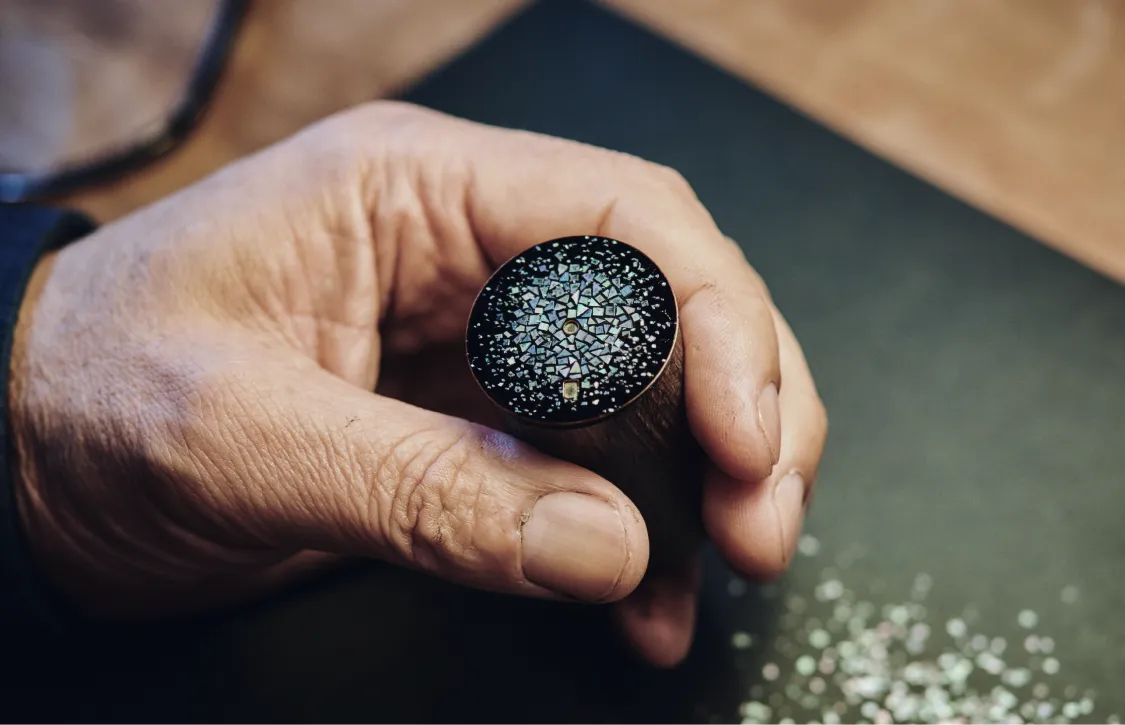
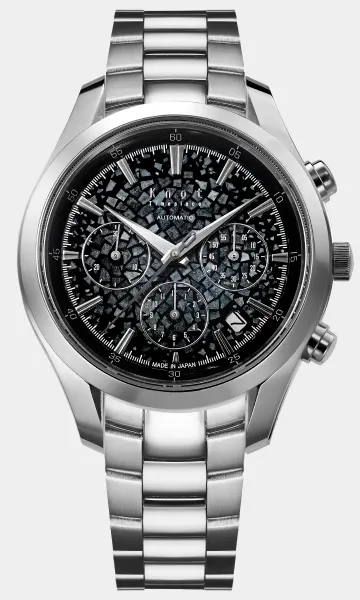
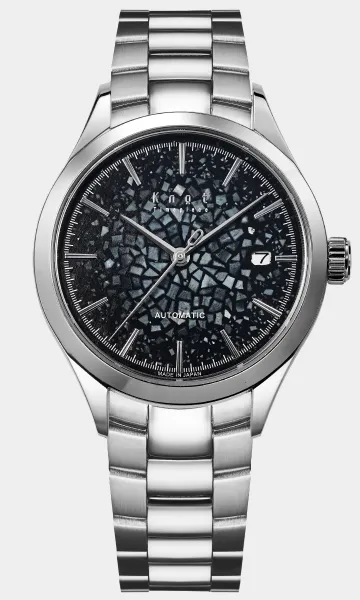
The Sumi Monochrome model features a refined interpretation of traditional raden, designed for subtle elegance and everyday wear. By applying an ultra-thin layer of urushi lacquer to freshwater shell using an original technique, saturation is gently reduced to create a calm, sophisticated tone.
Learn moreOutstanding skills of traditional Aizu artisans
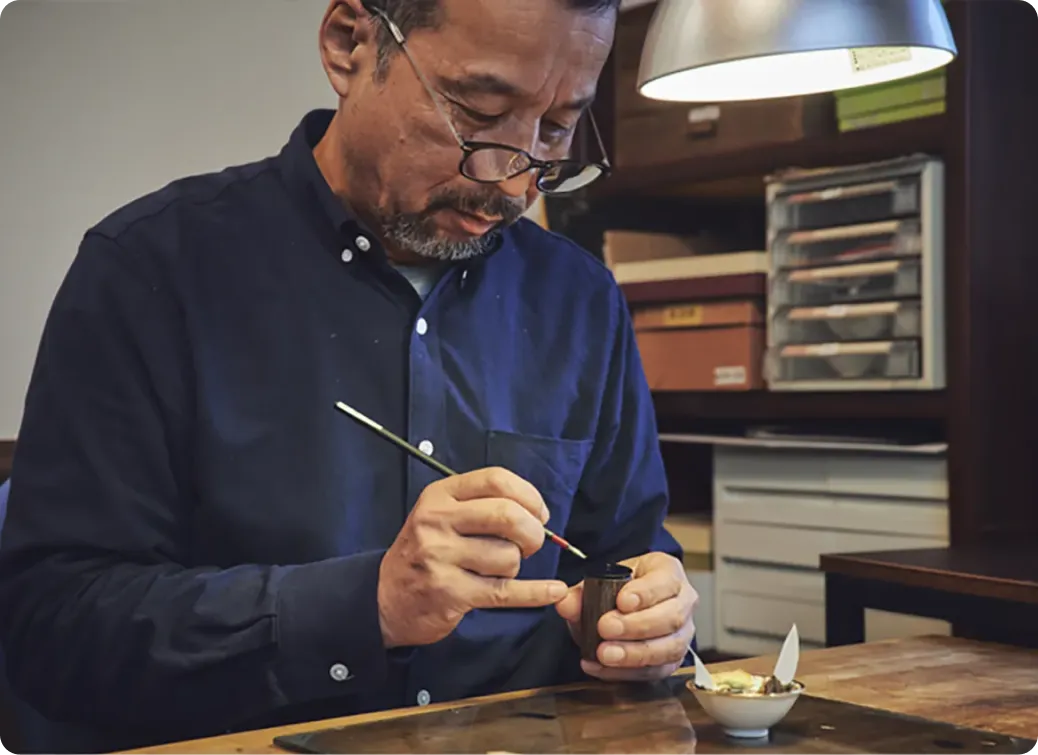
Traditional Artisan
Nobuichi Otake
Born in 1959 in Fukushima (the area formerly known as Aizu) Upon completing high school, Nobuichi Otake initially worked at a hydroelectric power station. However, he had wanted to work as a painter ever since he was a child. He happened to learn about the Maki-e lacquer art profession while watching TV, and became an apprentice to Sone Takuo, a contemporary master artisan of Aizu lacquerware.
After five years and five months as an apprentice, he became an independent Aizu lacquerware Maki-e craftsman.
Feature
The “ra” (螺) in Raden means “shell”, while “den” (鈿) signifies “inlay”. Raden is a beautiful decorative technique where the shiny inner layer of mother-of-pearl is finely processed and scattered over the surface of an “URUSHI” lacquer.This Japanese traditional craft was brought over from China in the Nara period (710-794), refined during the Heian period (794-1185), and handed down the generations to the present day.
Feature
The “ra” (螺) in Raden means “shell”, while “den” (鈿) signifies “inlay”. Raden is a beautiful decorative technique where the shiny inner layer of mother-of-pearl is finely processed and scattered over the surface of an “URUSHI” lacquer.This Japanese traditional craft was brought over from China in the Nara period (710-794), refined during the Heian period (794-1185), and handed down the generations to the present day.
Styling


The beauty of genuine urushi lacquer,
brought to life by the exceptional
skills of Aizu master artisans

URUSHI
金銀重ね
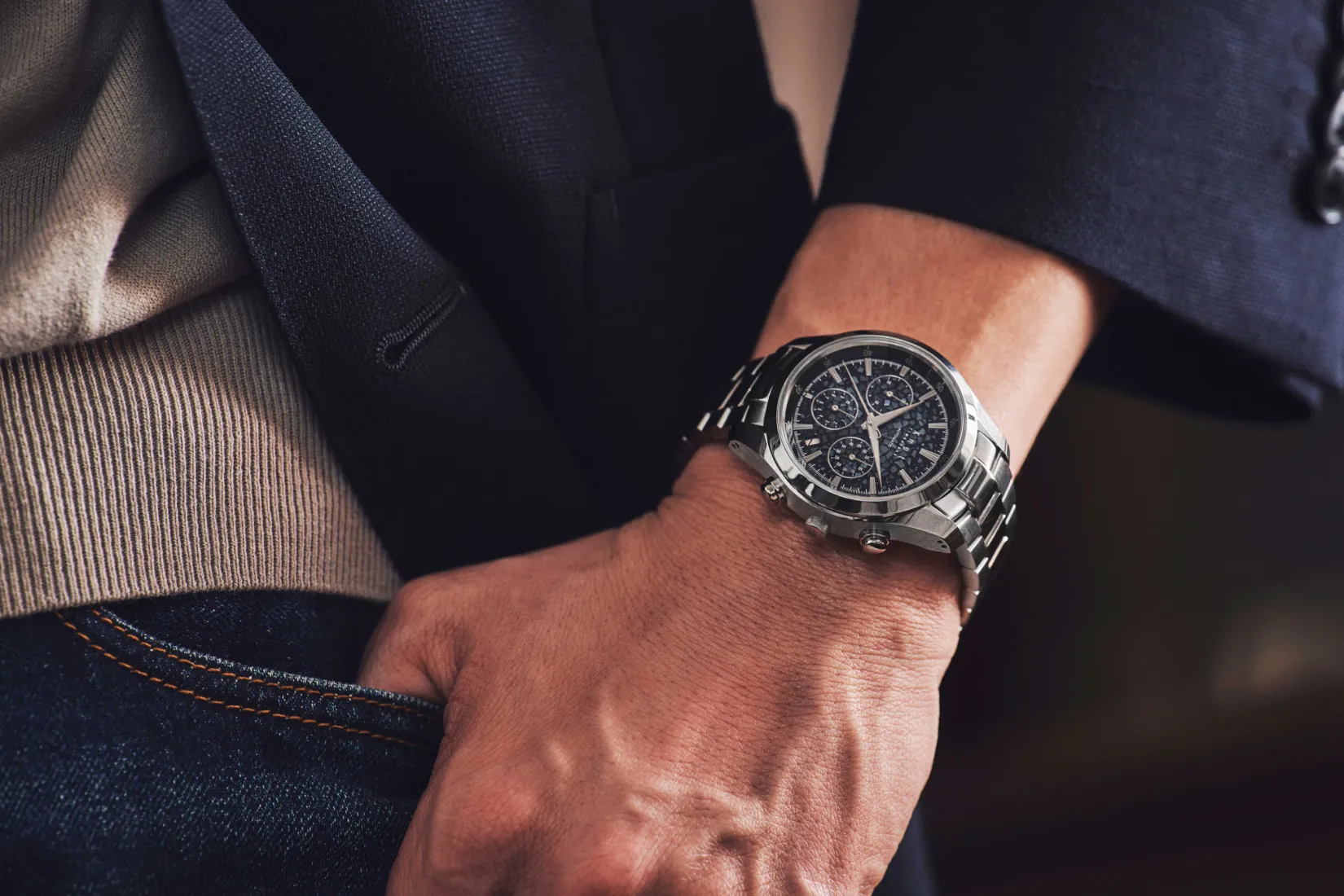
The dial is finished with the maki-e technique, where vibrant gold and silver powders are applied to a deep, lustrous black urushi dial with an intensity of black unique to lacquer. Once reserved for those of high rank, this lacquer finish is carefully polished by hand to enhance its brilliance, using only the highest-grade gold and silver powders.
Learn moreOutstanding skills of traditional Aizu artisans
Traditional Artisan
Nobuichi Otake
Born in 1959 in Fukushima (the area formerly known as Aizu) Upon completing high school, Nobuichi Otake initially worked at a hydroelectric power station. However, he had wanted to work as a painter ever since he was a child. He happened to learn about the Maki-e lacquer art profession while watching TV, and became an apprentice to Sone Takuo, a contemporary master artisan of Aizu lacquerware.
After five years and five months as an apprentice, he became an independent Aizu lacquerware Maki-e craftsman.
Feature
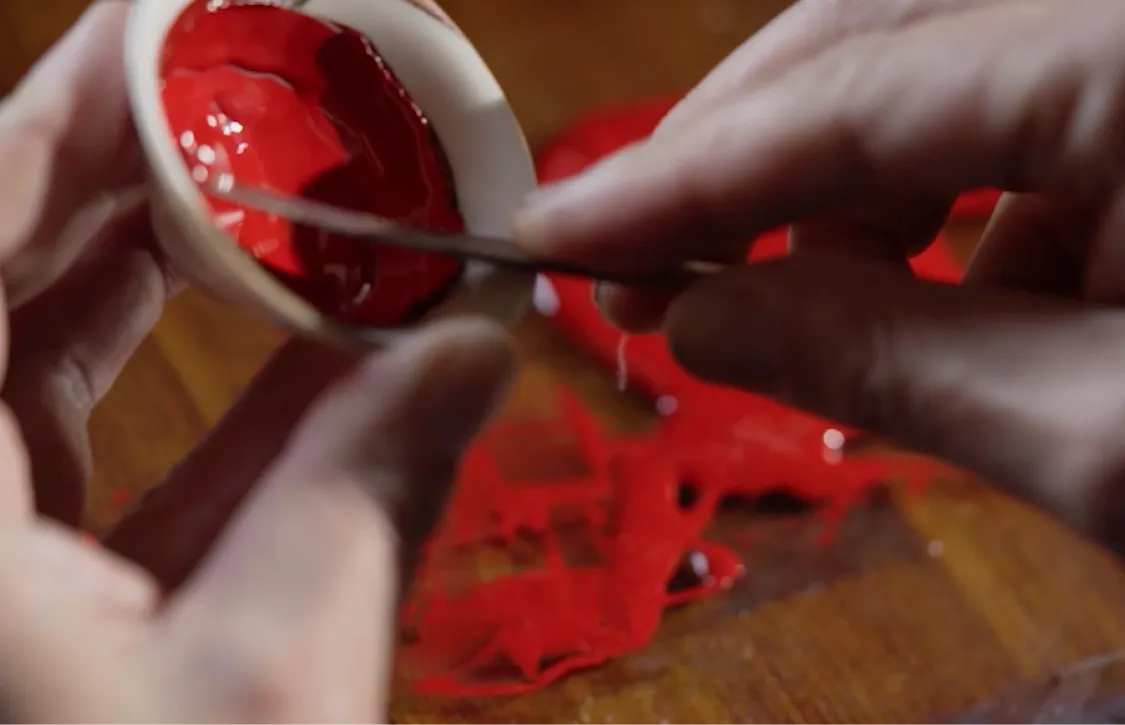
Urushi is a paint created from the sap of the lacquer tree.
Its history is ancient, with the world’s oldest lacquerware believed to be a 9,000-year-old burial ornament discovered in Japan. Lacquer crafts are used in many parts of Asia, and it is a technique that has become synonymous with Japan – so much so, that in other countries the word “Urushi” (lacquer) is sometimes translated simply as “japan” alone.
Feature
Urushi is a paint created from the sap of the lacquer tree.
Its history is ancient, with the world’s oldest lacquerware believed to be a 9,000-year-old burial ornament discovered in Japan. Lacquer crafts are used in many parts of Asia, and it is a technique that has become synonymous with Japan – so much so, that in other countries the word “Urushi” (lacquer) is sometimes translated simply as “japan” alone.
Styling
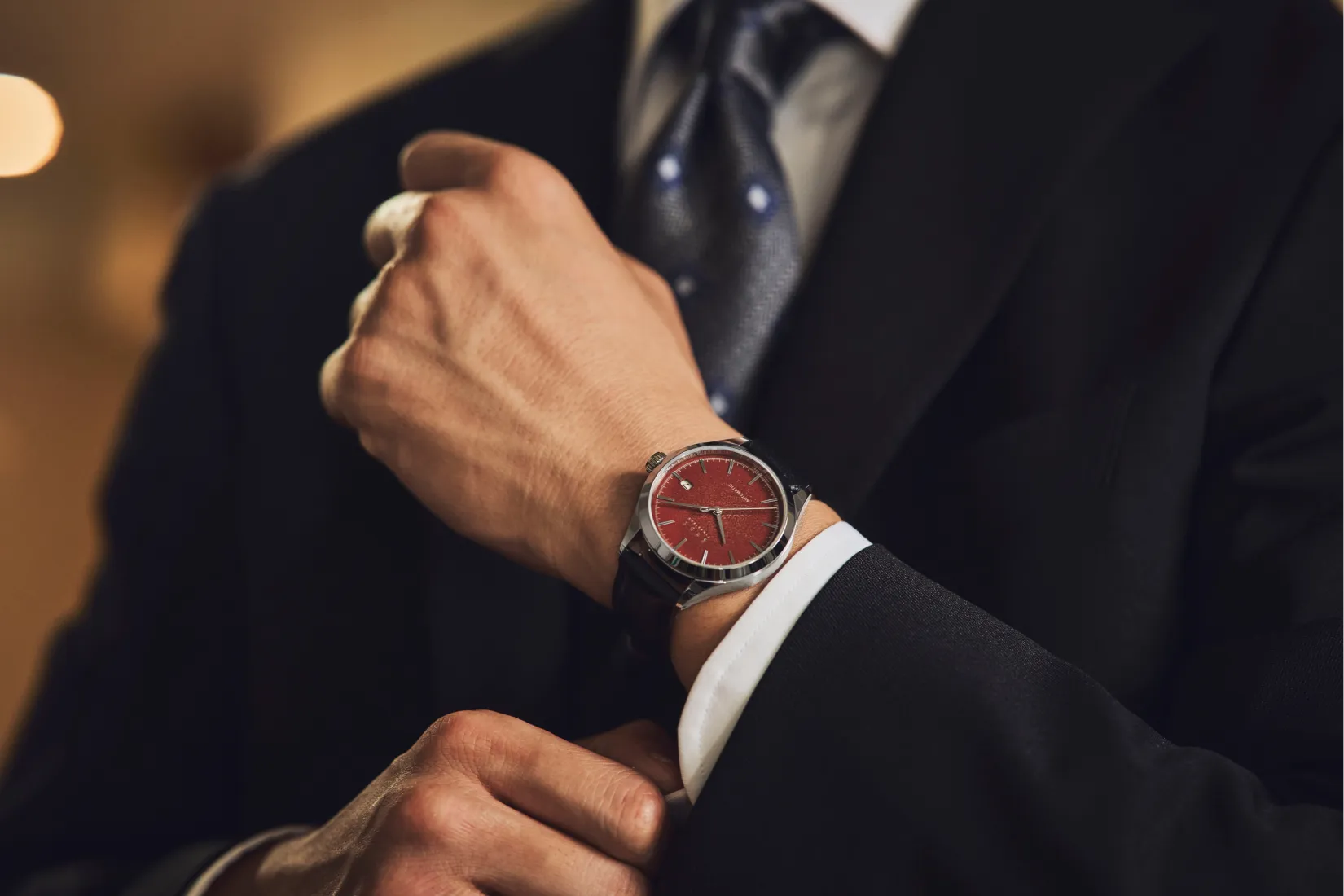
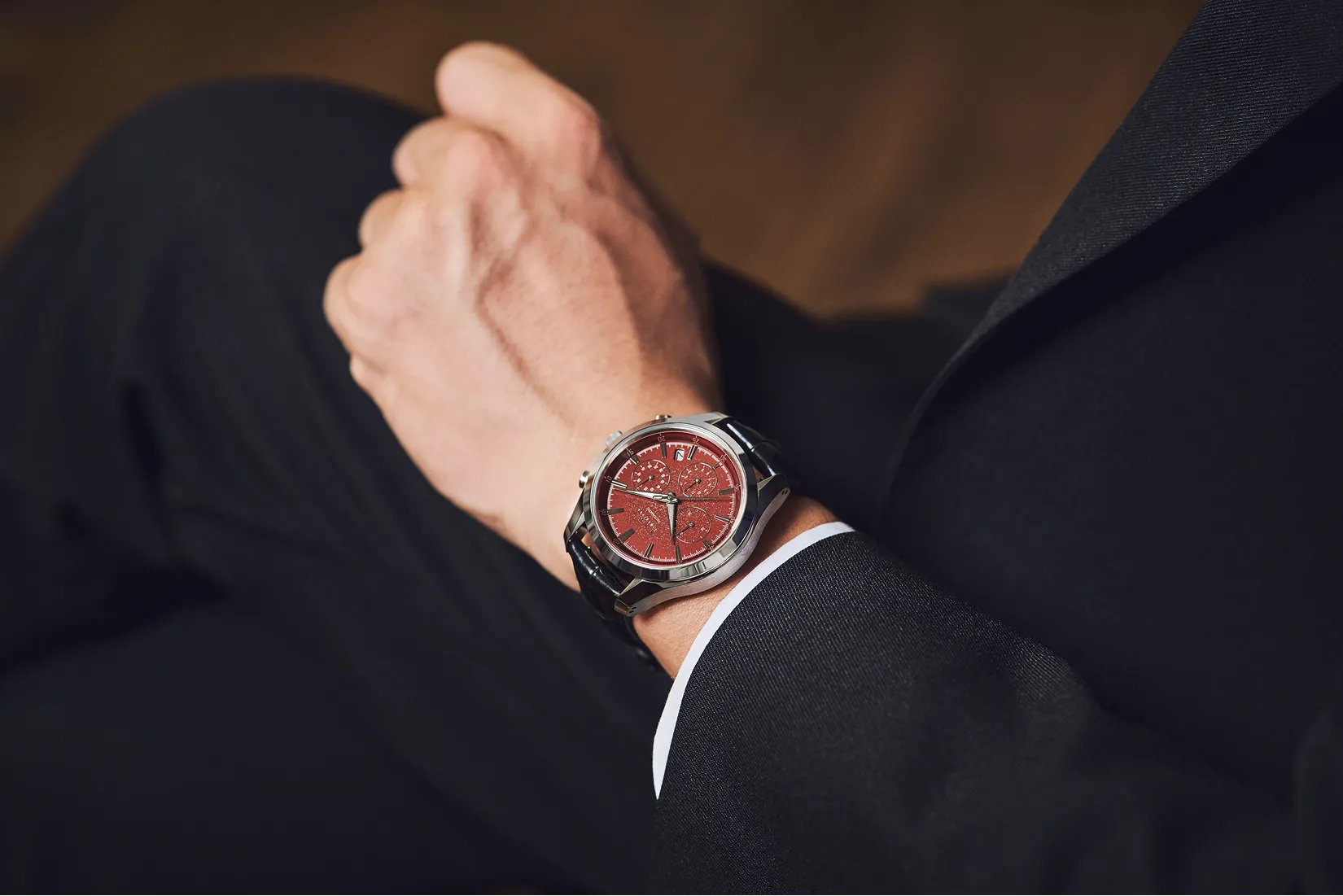


A one-of-a-kind art piece born from the fusion of 400 years of tradition and the precision of Japanese craftsmanship.

KANAZAWA
HAKU
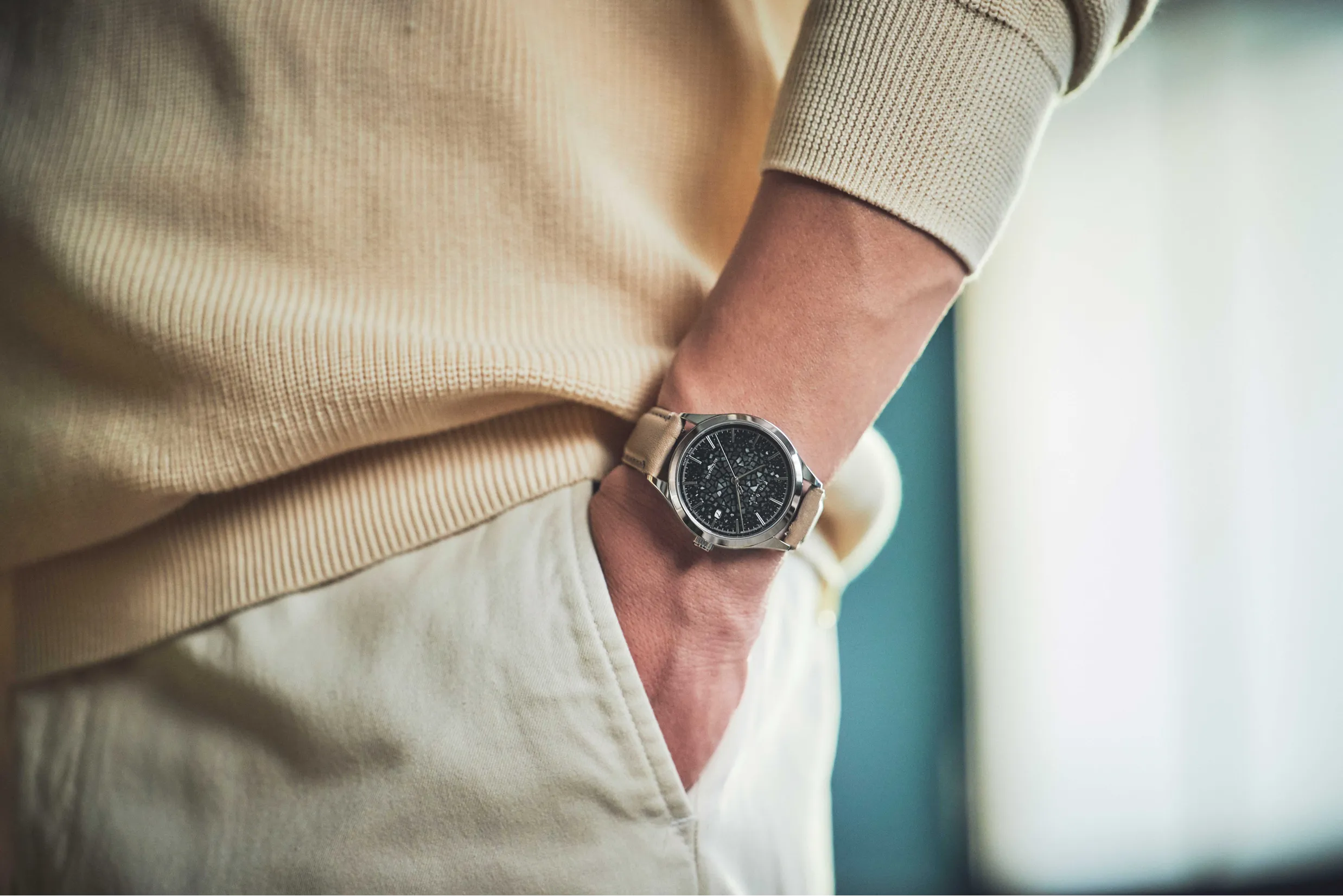
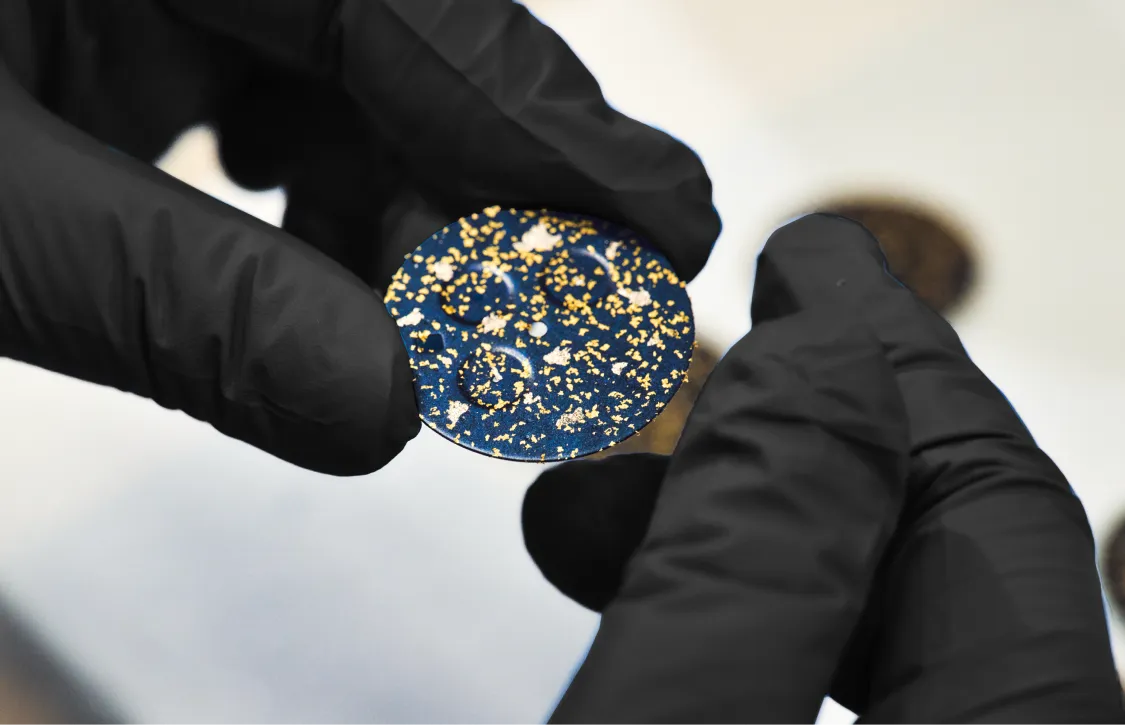
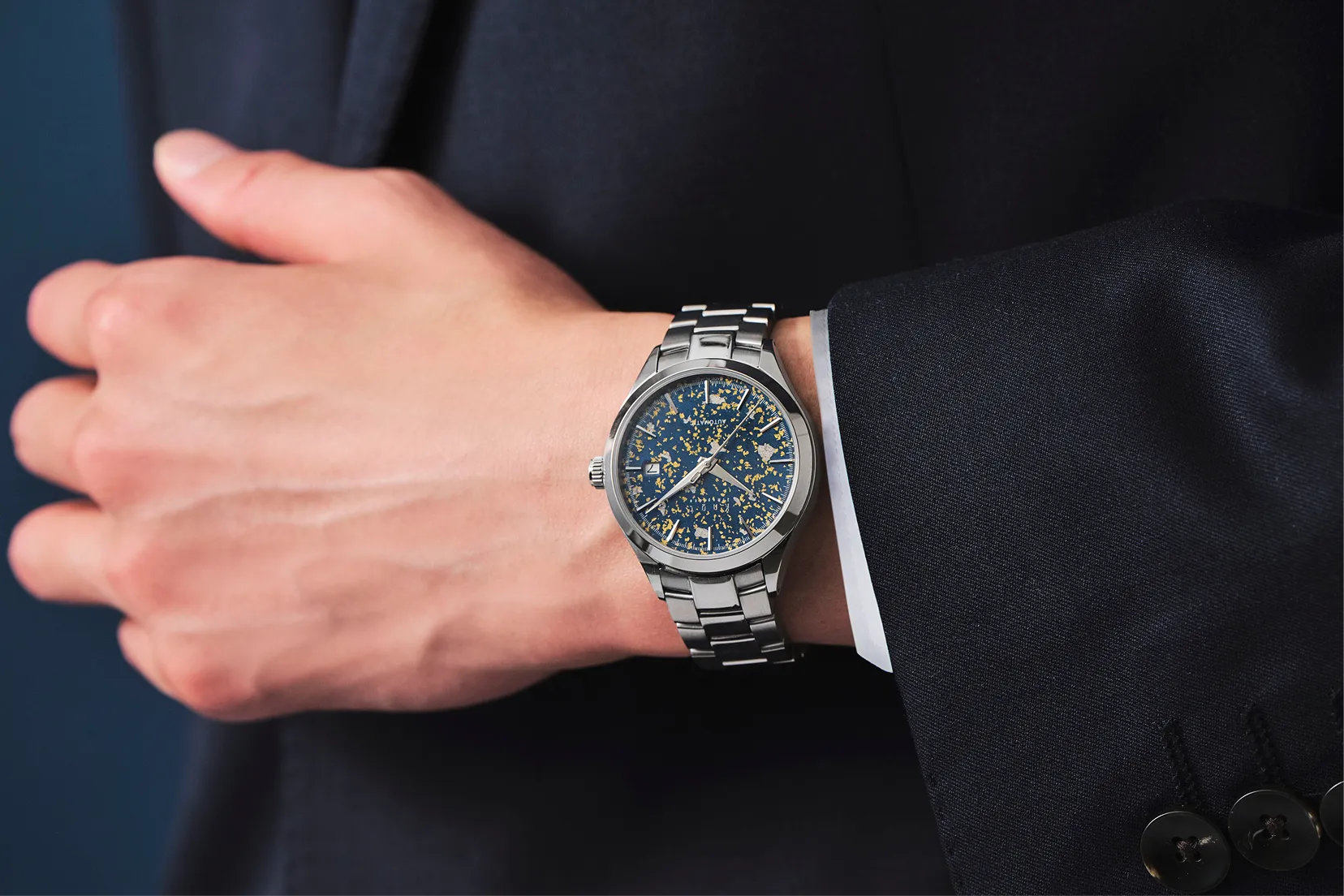
Using the kirimawashi technique, platinum leaf is cut into flakes and carefully laid across a dial dyed in deep indigo.
Gold and platinum leaf are then applied individually with tweezers and scattered using a bamboo tube in the chirashi style, creating expressions that are never the same twice.
A new form of craftsmanship and
timekeeping,
born from collaboration with Kanazawa Haku artisan
Satomi Miyagi
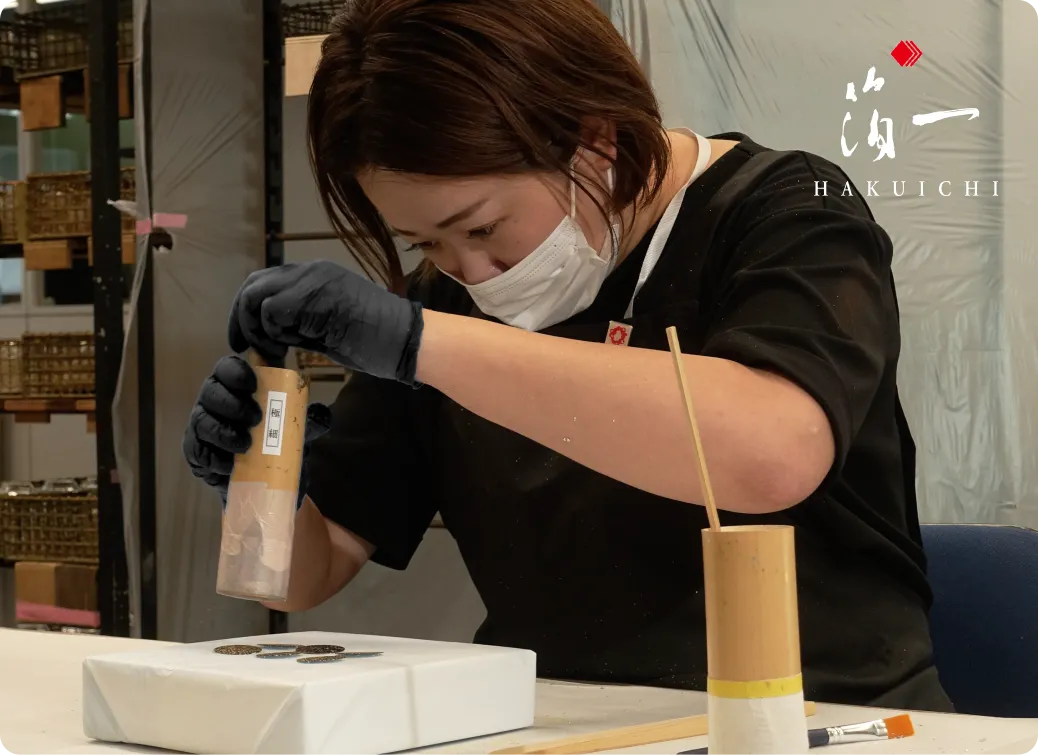
Kanazawa Haku artisan
Satomi Miyagi
For over 20 years, Satomi Miyagi has devoted herself to exploring the expressive possibilities of metal leaf. She explains: “My greatest challenge was letting chance and precision coexist within the tiny world of a watch dial.” Through repeated trial and error, she arrived at a method combining the randomness created by shaking a bamboo tube with the deliberate precision of placing each fragment by hand. This results in dials that are individual works of art, each with their own character, yet balanced and harmonious across the collection.
Knot MAGAZINEへFeature
Kanazawa Haku is a traditional craft that has been passed down for over 400 years in Kanazawa, Ishikawa Prefecture. Metals such as gold and silver are hammered into leaf as thin as one ten-thousandth of a millimeter, and used in fine arts, architecture, and decorative works. Its delicate brilliance and the craftsmanship behind it are widely regarded as symbolic of Japanese beauty.
Feature
Kanazawa Haku is a traditional craft that has been passed down for over 400 years in Kanazawa, Ishikawa Prefecture. Metals such as gold and silver are hammered into leaf as thin as one ten-thousandth of a millimeter, and used in fine arts, architecture, and decorative works. Its delicate brilliance and the craftsmanship behind it are widely regarded as symbolic of Japanese beauty.


HAKUICHI
The watch dials are hand-crafted by Hakuichi, founded in 1975.
Kanazawa has been a center of leaf artistry since Edo times, and even today it produces over 98% of Japan’s gold leaf.
Hakuichi champions the fusion of tradition and innovation, preserving artisanal techniques while continually finding new ways to apply them.
Its efforts extend beyond Japan, sharing the beauty of Kanazawa leaf with the world.
Styling



Complete the Look


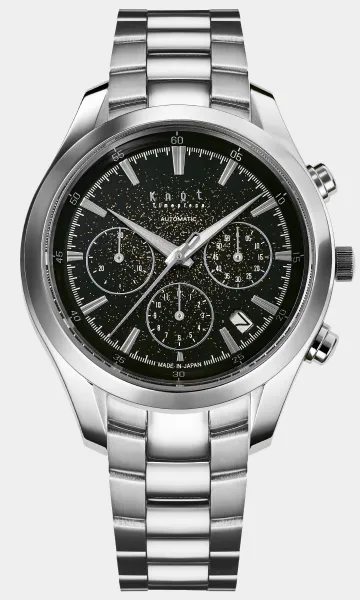

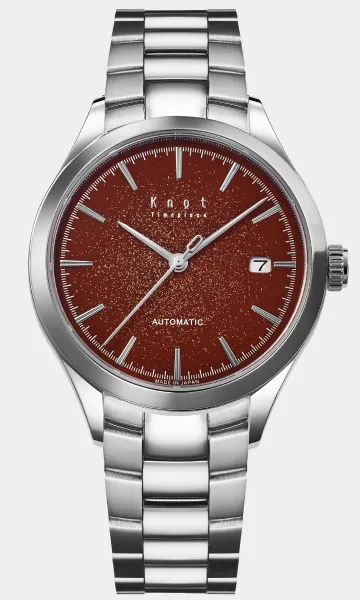

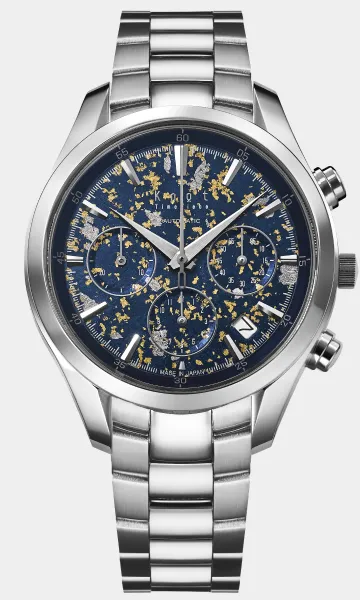

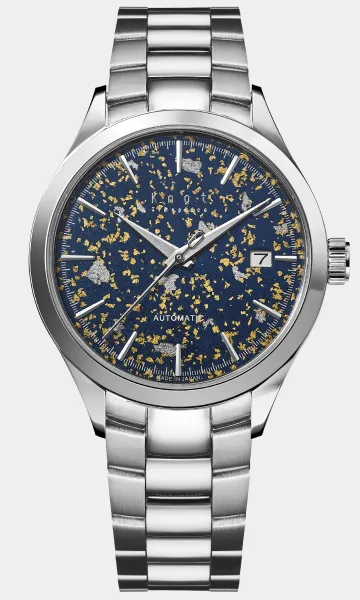


The sign of a
high-performance timepiece:
high-beat movement
For the movement – the watch’s beating heart – Knot has adopted the movement made in Japan.
This high-beat movement oscillates 28,800 times per hour (8 times a second), reducing the distance of the swing of the second hand and drastically increasing the precision of the watch.

“Sallaz Polishing” is synonymous with luxury Japanese-made mechanical watches
A clear mirror-finished case, polished to perfection by the hands of skilled craftsmen
The Knot Premium Automatic model uses a case made from 316L surgical stainless steel – an exceptionally high-purity alloy also used in medical settings – and finished with Zaratsu polishing. Zaratsu mirror polishing is an advanced finishing technique that creates flat, distortion-free surfaces with sharply defined edges. Only a very small number of craftsmen are capable of performing this process, earning it the reputation of “phantom polishing”. Today, it is rarely seen outside high-end Japanese-made watches. By polishing each surface individually, different expressions can be drawn out from the same material. This highly sophisticated technique is made possible by the veteran craftsmen at Hayashi Seiki Seizo.

Non-reflective,
coated sapphire glass
The crystal of the Premium Automatic series utilizes the same level of sapphire glass with anti-reflective coating that can be found in luxury watches. The coating is on one side only, which increases the visibility of the clock face while at the same time minimizing discoloration of the glass.

Staineless Steel Case
SUS316L
The case is made from high-purity stainless steel SUS316L, a corrosion-resistant material also used in surgical instruments. This metal emits almost no ions that can cause allergic reactions, making it safe to wear even for those with metal sensitivities.*
*Please note that this does not guarantee that all individuals will be free from allergic reactions.

3-Year Warranty
The Premium Automatic Series comes with a 3-year warranty from the date of purchase, designed to be cherished for years to come.
Knot also operates its own atelier, offering repair and maintenance services to ensure your watch stays in excellent condition.
For more information, please visit our Repair Inquiries page.

-
 Sold out
NEW
AT-38SVJRBL
¥126,000 JPY Regular price1260Point
Sold out -
 Sold out
NEW
AT-38SVJRBL_LD-16SVSV-AT-38
¥165,000 JPY Regular price1650Point
Sold out -
NEW
ATC-40SVJRBL
¥258,000 JPY Regular price2580Point
-
NEW
ATC-40SVJRBL_LD-16SVSV-ATC-40
¥297,000 JPY Regular price2970Point
-
AT-38SVJRBK-R
¥114,000 JPY Regular price1140Point
-
AT-38SVJRBK-R_LD-16SVSV-AT-38
¥153,000 JPY Regular price1530Point
-
ATC-40SVJRBK-R
¥246,000 JPY Regular price2460Point
-
ATC-40SVJRBK-R_LD-16SVSV-ATC-40
¥285,000 JPY Regular price2850Point
-
AT-38SVJPRDGS
¥102,000 JPY Regular price1020Point
-
 Sold out
AT-38SVJPRDGS_LD-16SVSV-AT-38
¥141,000 JPY Regular price1410Point
Sold out -
AT-38SVJPBKGS
¥102,000 JPY Regular price1020Point
-
AT-38SVJPBKGS_LD-16SVSV-AT-38
¥141,000 JPY Regular price1410Point
-
AT-38SVPTBL
¥102,000 JPY Regular price1020Point
-
AT-38SVPTBL_LD-16SVSV-AT-38
¥141,000 JPY Regular price1410Point
-
ATC-40SVJPRDGS
¥234,000 JPY Regular price2340Point
-
ATC-40SVJPRDGS_LD-16SVSV-ATC-40
¥273,000 JPY Regular price2730Point
-
ATC-40SVJPBKGS
¥234,000 JPY Regular price2340Point
-
ATC-40SVJPBKGS_LD-16SVSV-ATC-40
¥273,000 JPY Regular price2730Point
-
ATC-40SVPTBL
¥234,000 JPY Regular price2340Point
-
 Sold out
ATC-40SVPTBL_LD-16SVSV-ATC-40
¥273,000 JPY Regular price2730Point
Sold out


